

Faceplates and Overlays
Transportation Safety Labels for Clear Warnings
Transportation equipment can place operators, technicians, and maintenance teams near moving parts, electrical systems, hot surfaces, pinch points, and other hazards. Clear warnings help people identifythese risks before they act.
Transportation safety labels communicate hazards and provide important instructions at the point of use. Effective labels need clear graphics, readable text, proper placement, and materials suited to the operating environment.
For manufacturers and fleet operators, consistent labeling can also support a broader equipment safety and compliance program.
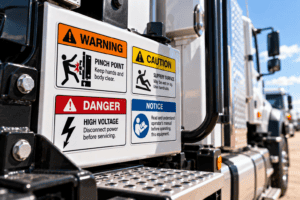
Transportation Safety Labels: Hazard Communication Needs
A safety label should make a hazard easy to recognize and understand. The message should tell the reader what requires attention and, when appropriate, what action to take.
Common transportation applications include:
- Moving parts and pinch points
- Electrical hazards
- Hot surfaces
- Fuel and chemical hazards
- Operating instructions
- Service and maintenance warnings
- Emergency information
- Restricted areas
Different applications may require warning labels, caution labels, or other types of safety identification.
PPS manufactures custom labels, decals, stickers, and tags that can include text, symbols, colors, instructions, and other application-specific graphics.
Hazard communication labels should be designed around the actual equipment and risk. Manufacturers should evaluate applicable standards, regulations, and customer requirements when defining the content and format.
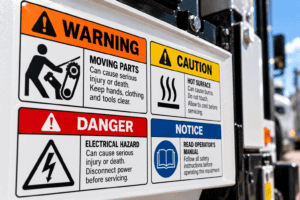
Legibility + Durability for Safety Labels
A warning only works when people can see and read it.
Good equipment warning labels use clear text, recognizable graphics, and enough contrast for the intended viewing conditions. Placement also matters. Operators should be able to see the warning before or while they encounter the related hazard.
Durability is just as important.
Transportation equipment may face:
- UV and sunlight exposure
- Rain and moisture
- Dirt and road debris
- Cleaning products
- Oils and chemicals
- Scratches and abrasion
- Hot and cold temperatures
- Frequent handling
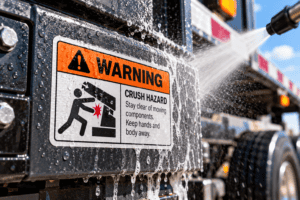
The label material, printing method, protective layer, and adhesive should match these conditions. Durable safety stickers used inside a vehicle may need a different construction than outdoor safety decals placed on exposed equipment.
Testing can help confirm that the finished label stays attached and readable under expected conditions.
Standardization + Maintenance Lifecycle
Consistency makes safety information easier to manage across a fleet or product line.
Standardizing label designs can help teams use the same terminology, symbols, colors, sizes, and identification methods across similar equipment. This can also make replacement labels easier to identifyand order.
Fleet safety labels should also become part of routine equipment inspections.
A simple maintenance process can include:
- Identify required warning locations.
- Document the approved label design.
- Record where each label is installed.
- Inspect labels during routine maintenance.
- Check for fading, damage, or missing labels.
- Replace labels that are no longer readable.
- Review label requirements when equipment changes.
Safety teams should also review applicable requirements when creating or updating transportation compliance labels. Label specifications may vary based on the equipment, hazard, market, and relevant standards.
Standardization does not replace this review. Instead, it helps manufacturers and fleet teams apply approved safety information more consistently.
Build Safety Identification for the Environment
Effective safety identification starts with a clear message and the right label construction.
Transportation safety labels should remain visible, readable, and attached throughout their intended service life. Buyers should consider the hazard, placement, equipment surface, outdoor exposure, cleaning process, and expected wear before choosing a construction.
PPS manufactures durable printed components for the transportation and equipment industry, including safety labels, transportation decals, overlays, equipment identification, and other printed graphics.
Contact PPS to discuss durable labels, decals, overlays, or identification solutions for your transportation application.

FAQ
What are transportation safety labels?
Transportation safety labels communicate warnings, hazards, operating instructions, or other safety information on vehicles and equipment.
What makes a good equipment warning label?
A good warning label uses clear text, readable graphics, appropriate placement, and a label construction suited to the operating environment.
Do outdoor safety decals need special materials?
Outdoor applications may require materials, inks, protective layers, and adhesives selected for UV, moisture, temperature, chemical, and abrasion exposure.
How often should fleet safety labels be inspected?
Inspection schedules depend on the equipment and operating environment. Fleet teams can include safety labels in routine maintenance checks and replace labels that become damaged, missing, or difficult to read.
Do transportation compliance labels guarantee compliance?
No. Label requirements depend on the equipment, hazard, application, market, and applicable standards or regulations. Manufacturers should evaluate the specific requirements for each application.