

Faceplates and Overlays
Technology and communication equipment relies on accurate product identification throughout manufacturing, deployment, maintenance, and replacement cycles. Electronics labels help manufacturers identify products, support traceability, display compliance information, and maintain asset visibility throughout the equipment lifecycle.
Electronics labels help companies identify, track, and manage technology and communication equipment throughout their lifecycle. They are commonly used on network hardware, communication devices, control systems, and electronic assemblies. Choosing the right materials, adhesives, and printing methods helps keep important information clear and readable, even in demanding environments.
Why Are Electronics Labels Important?
Modern technology equipment often includes multiple identification requirements. Manufacturers may need to display serial numbers, model numbers, safety information, asset tracking data, or regulatory markings on products and assemblies.
Without durable product identification labels, critical information can become difficult to read or completely lost due to environmental exposure, cleaning procedures, heat, or handling.
Common applications for electronics labels include:
- Product identification labels
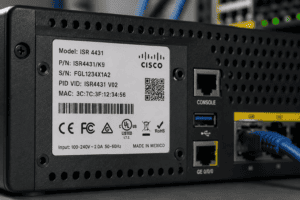
- Serial number labels
- Barcode labels
- QR code labels
- Compliance labels
- Asset tracking labels
- Traceability labels
- Electronics OEM labels
These labels help support equipment identification throughout manufacturing, distribution, installation, and service operations.
Challenges Facing Technology & Communication Equipment
Technology labels are often exposed to conditions that can degrade standard label materials.
Common environmental challenges include:
- Elevated operating temperatures
- Cleaning chemicals and solvents
- Moisture and humidity
- Abrasion from handling
- UV exposure
- Long product lifecycles
For communication equipment labels installed in telecom cabinets, networking infrastructure, or industrial environments, durability becomes especially important. A damaged label can complicate maintenance, replacement, inventory management, and product lifecycle tracking.
As a result, manufacturers frequently specify durable equipment labels that are engineered to withstand the expected operating environment.
Best Practices and Specification Tips for Electronics Labels
Selecting the right electronics labels starts with understanding both application requirements and environmental conditions.
Choose Materials Based on Environmental Exposure
Heat resistant labels are commonly used when products generate significant operating temperatures or experience thermal cycling during use.
Chemical resistant labels may be necessary when equipment is exposed to cleaning agents, industrial chemicals, or manufacturing processes that could damage printed information.
Material selection should consider:
- Temperature range
- Surface type
- Chemical exposure
- Indoor or outdoor use
- Expected product lifespan
Prioritize Long-Term Readability
Product identification labels should remain legible throughout the equipment lifecycle.
Many manufacturers incorporate:
- High-contrast printing
- Durable inks
- Protective laminates
- Laser-markable materials
- Barcode and QR code verification
These features can help preserve critical data and improve scanning performance over time.
Support Tracking Requirements
Traceability labels help manufacturers track products from production through field deployment.
Typical traceability information includes:
- Serial numbers
- Lot codes
- Manufacturing dates
- Production locations
- Unique identifiers
This information can support inventory management, service records, warranty tracking, and quality programs.
Design for Electronics OEM Requirements
Electronics OEM labels often need to fit within limited space while displaying multiple data elements.
Careful design planning can improve readability and ensure important information remains accessible without overcrowding the label.
Testing and Implementation Checklist
Before full production deployment, manufacturers should evaluate label performance under expected operating conditions.
Use the following checklist when specifying electronics labels:
Environmental Testing

✓ Verify temperature resistance requirements
✓ Evaluate chemical exposure risks
✓ Assess abrasion resistance needs
✓ Review moisture and humidity conditions
✓ Confirm outdoor exposure requirements if applicable
Identification Requirements
✓ Define barcode or QR code specifications
✓ Determine serial number and variable data needs
✓ Verify font size and readability requirements
✓ Confirm compliance information placement
Production Validation
✓ Test label adhesion on production materials
✓ Verify print durability
✓ Conduct scan testing for barcode readability
✓ Review long-term performance expectations
✓ Document approval criteria
Testing helps reduce implementation risks and supports more reliable product identification throughout the equipment lifecycle.
Conclusion
Electronics labels are an essential component of technology and communication equipment. They help support product identification, traceability, asset management, and operational efficiency while providing critical information throughout the life of a product.
By selecting appropriate materials, considering environmental conditions, and validating performance through testing, manufacturers can improve label durability and maintain reliable identification in demanding applications.
Contact PPS to discuss durable printed components, labels, decals, overlays, or identification solutions for your application.
FAQ
What are electronics labels used for?
Electronics labels are used for product identification, serial numbering, asset tracking, traceability, barcode applications, and compliance information on electronic equipment.
What makes a label durable for technology equipment?
Durable equipment labels typically use specialized materials, adhesives, inks, and protective constructions designed to withstand heat, chemicals, abrasion, and environmental exposure.
When are heat resistant labels needed?
Heat resistant labels may be appropriate for electronic products that generate elevated operating temperatures or experience thermal cycling during use.
Why are traceability labels important?
Traceability labels help manufacturers track products through manufacturing, distribution, installation, maintenance, and service activities.
What information is typically included on communication equipment labels?
Communication equipment labels commonly include model numbers, serial numbers, barcodes, QR codes, compliance information, and asset tracking data.