
Faceplates and Overlays
Fleet Tracking Labels for Asset Management
Transportation fleets can include vehicles, tools, parts, trailers, containers, and other equipment. Keeping track of those assets requires a clear way to connect each physical item to its digital record.
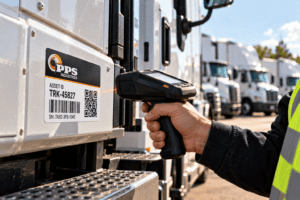
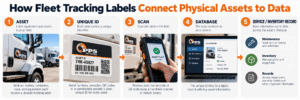
Fleet tracking labels provide that connection. Using serial numbers, barcodes, QR codes, and other variable data, transportation teams can identify and scan individual assets throughout their service life.
For effective asset management, the label must carry the right data, fit the equipment, and remain readable in the conditions where the asset operates.
Fleet Tracking Labels: Use Cases + Data Model
A tracking system starts with a unique identifier. Variable data labels allow each asset to receive its own number, barcode, QR code, or combination of identifiers.
Common applications include:
- Fleet asset tracking
- Vehicle and trailer identification
- Tool and equipment tracking
- Parts inventory
- Maintenance records
- Inspection tracking
- Warehouse and yard management
- Service history
PPS manufactures custom labels, decals, stickers, and tags with static and variable information.
The next step is deciding what data each label should carry.
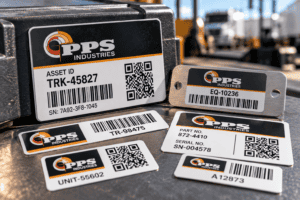
For example, serial number labels can provide a simple unique ID. Barcode labels can make high-volume scanning faster. QR code labels can connect users to digital records, service information, instructions, or other data when supported by the tracking system.
Human-readable text can also appear beside the machine-readable code. This gives workers another way to identify an asset if a scanner is not available.
For larger operations, these labels can support asset tracking and inventory management for transportation.
Format Selection for Fleet Tracking Labels
The right format depends on how and where workers will use the label.
Start with the asset. Consider its size, surface, location, and operating environment. A label for an interior tool cabinet may need a different construction than one attached to outdoor transportation equipment.
The data format matters too.
Barcode labels work well when teams use compatible scanners and need fast data capture. QR codes can hold or link to more information and may be useful when workers scan assets with supported mobile devices.
Transport inventory tags can also help identify equipment or items where a standard adhesive label is not the best fit.
When selecting a format, consider:
- Asset size and surface
- Available label space
- Barcode or QR code size
- Scanner type
- Viewing and scanning distance
- Variable information
- Expected service life
- Outdoor or indoor use
PPS can combine variable data with durable label materials to create equipment identification labels suited to the application.
Durability + Scan-Grade Testing for Fleet Tracking Labels
A tracking label only works when people and scanners can read it.
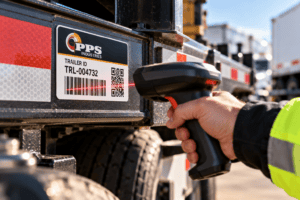
Transportation environments may expose labels to sunlight, moisture, dirt, cleaning, chemicals, and abrasion. These conditions can damage printed data or reduce scan quality.
For durable barcode labels, teams should test both physical durability and scanning performance.
Testing may include:
- Barcode readability
- QR code readability
- Adhesive performance
- Moisture exposure
- Cleaning chemicals
- Abrasion
- UV exposure
- Temperature changes
Teams can apply sample labels to the actual equipment and scan them before and after exposure. This process helps confirm that the label material, adhesive, printed code, and equipment surface work together.
Scan testing is especially important for f leet management labels because a damaged code can slow inventory checks, maintenance work, and asset identification.
Build Better Fleet Asset Identification
Effective asset management starts with reliable identification. Asset tracking labels give each vehicle, tool, part, or piece of equipment a link to the information used to manage it.
The best solution combines the right data format with a durable label construction. Serial numbers provide unique IDs. Barcodes support fast scanning. QR codes can connect physical equipment with digital information.
PPS develops durable identification solutions for the transportation and equipment industry, including variable data labels, decals, tags, overlays, and other printed components.
Properly specified fleet tracking labels can help transportation teams identify assets, manage inventory, and maintain useful records throughout the equipment lifecycle.
Contact PPS to discuss durable printed components, labels, decals, overlays, or identification solutions for your transportation application.
FAQ
What are fleet tracking labels?
Fleet tracking labels are identification labels that connect physical transportation assets with tracking or management records. They can include serial numbers, barcodes, QR codes, and other variable data.
What is a variable data label?
A variable data label contains information that changes from one label to another. Examples include unique serial numbers, asset IDs, barcodes, and QR codes.
Should I use a barcode or QR code for fleet tracking?
It depends on the tracking system, scanner, available label space, and information needs. Barcodes can support fast scanning, while QR codes can hold or link to more information.
Can asset tracking labels be used outdoors?
Yes, when the label construction matches the environment. The label material, adhesive, print method, and protective layer should be selected for expected exposure.
Why should durable barcode labels be scan tested?
A barcode can remain attached but become difficult to scan after abrasion, dirt, chemicals, or other exposure. Testing helps confirm that the code stays readable under expected operating conditions.