Faceplates and Overlays
Industrial labels often face tough conditions. Chemicals, oils, water, sunlight, salt spray, heat, cold, vibration, and abrasion can damage a label over time.
When a label fails, the problem goes beyond appearance. Important information may become hard to read. Barcodes may stop scanning. Labels may peel from equipment. Workers may need to replace them sooner than planned.
Harsh environment labels are designed to address these challenges. PPS works with customers to develop durable printed components and identification solutions for demanding applications.
Why Do Industrial Labels Fail?
Labels can fail when their materials do not match the conditions around them.
For example, a label may look fine when first applied. After months of use, its edges may lift. Printed information may fade or wear away. Chemicals may damage the surface.
Common causes of label failure include:
- Cleaning chemicals and solvents
- Oils, fuels, and other fluids
- UV and sunlight exposure
- Rain and outdoor weather
- Frequent washdowns
- Salt spray and moisture
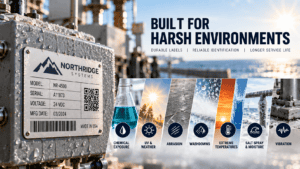
- High or low temperatures
- Abrasion and handling
- Vibration
A label may also face several of these conditions at once.
An outdoor equipment label could face rain, sunlight, heat, cold, cleaning chemicals, and abrasion. A weather resistant label must account for the full environment, not just exposure to weather.
What Makes Harsh Environment Labels Durable?
There is no single label material for every harsh environment. The right solution depends on where and how the label will be used.
Three areas are important: the label material, adhesive, and printed surface.
Label Material
The label material forms the base of the construction. Different materials respond differently to water, chemicals, heat, cold, sunlight, and abrasion.
The material should match the conditions of the application.
Adhesive
A label cannot do its job if it falls off.
The right adhesive depends on the surface, temperature, moisture, chemicals, and other conditions. Surface texture can also affect how well a label bonds.
Knowing these details before production can help reduce adhesion problems later.
Printed Surface
Printed information must remain clear and readable.
Some applications may need an added layer of protection over the graphics. This layer can help protect the printed surface from chemicals, cleaning, or repeated contact.
This can be useful for chemical resistant labels exposed to cleaners, oils, solvents, and other industrial fluids.
Match Harsh Environment Labels to the Conditions
The best place to start is with the environment.
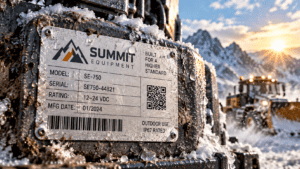
Consider labels used on outdoor telecom equipment. They may face years of sun, rain, summer heat, freezing temperatures, and regular service.
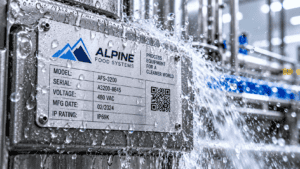
A food processing or washdown environment creates different problems. Water, cleaning products, and frequent washing can affect both the label surface and adhesive.
Cold storage has its own challenges. Low temperatures and moisture can affect how some materials and adhesives perform.
The same label construction may not work well in all three environments.
For this reason, durable industrial labels should be selected based on where they will be used and what they need to withstand.
Ask for Proof of Label Durability
The word “durable” does not explain how a label will perform.
Buyers should look at the conditions behind the claim.
Start with a few basic questions. Which chemicals will touch the label? Will it be used outdoors? How often will the equipment be cleaned? Will workers regularly touch or scrape the label? What temperatures will it face?
Testing can provide more information.
Depending on the application, testing may look at chemical exposure, abrasion, UV exposure, temperature changes, or salt fog. ASTM and ISO test methods may also be useful when they match the needs of the application.
Test requirements should be based on how and where the product will be used.
This type of information gives buyers a clearer way to compare label options.
A Low-Cost Label Can Cost More Later
Price matters, but the lowest initial price may not mean the lowest total cost.
Consider a label that fails on equipment already installed in the field. Someone must find the affected equipment and order a replacement. The old label may need to be removed. The surface may need to be cleaned. A worker then needs to install the new label.
That process takes time and labor.
The cost can grow when equipment is installed across many locations. Label failure may also cause scanning issues, service delays, or problems identifying equipment.
This is why buyers should consider the total cost of ownership.
A durable industrial label designed for the application may help reduce replacement work and related costs.
How to Choose Abrasion Resistant Labels
Before choosing abrasion resistant labels or other durable printed components, collect information about the application.
Consider:
- What surface will the label be applied to?
- What temperatures will it face?
- Will chemicals or oils touch it?
- Will the equipment be washed?
- Will the label be used outdoors?
- Will it face sunlight or salt spray?
- How often will people touch or rub it?
- How long should the label last?
These details help PPS evaluate materials, adhesives, printing methods, and protective options for the application.
Frequently Asked Questions
What are harsh environment labels?
Harsh environment labels are made for applications where tough conditions may damage a standard label. These conditions can include chemicals, water, UV exposure, abrasion, heat, cold, and frequent cleaning.
Are chemical resistant labels resistant to every chemical?
No single construction is right for every chemical. Performance can depend on the chemical, temperature, exposure time, and label construction. Buyers should identify the chemicals used in their application before selecting a label.
How can I choose a durable industrial label?
Start with the conditions the label must face. Consider the surface, chemicals, temperature, water, sunlight, abrasion, and expected service life. PPS can use this information to help evaluate suitable options.
Choose Labels for the Real Environment
Successful harsh environment labels start with the application.
The material, adhesive, printing method, and protective layers should match the conditions the label will face. Buyers should also consider available test information when comparing options.
Planning for these conditions can help reduce early label failure, replacement work, and added costs.
Contact PPS to discuss durable printed components, labels, decals, overlays, or identification solutions for your application.