

Faceplates and Overlays
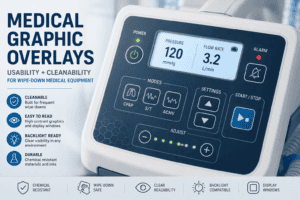
Medical equipment may be cleaned and wiped down many times throughout its service life. The control surface still needs to remain readable, usable, and securely attached. That makes medical graphic overlays an important part of the overall equipment design.
A well-designed overlay does more than display buttons and instructions. It creates the surface users interact with while helping protect the underlying interface. For medical equipment, material, finish, graphics, windows, adhesives, and construction should all be selected with the intended cleaning process and operating environment in mind.
Material and Finish Selection for Medical Graphic Overlays
Material selection is one of the first decisions when designing medical graphic overlays. Polyester and polycarbonate are two common choices for graphic overlay applications.
Polyester is often considered when durability and resistance to repeated use and chemical exposure are important. Polycarbonate provides design flexibility and can work well for applications involving forming, embossing, or other physical features. The right choice depends on the equipment, expected use, cleaning agents, and required service life.
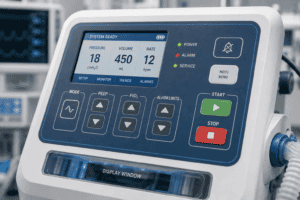
The surface finish matters too. Glossy surfaces can create a polished appearance but may increase glare under bright lighting. Matte or textured finishes can reduce reflections and help hide fingerprints or minor surface wear.
For cleanable overlays, designers should also consider the overall panel geometry. Smooth surfaces with fewer unnecessary recesses or edges may be easier to wipe than complex surfaces.
The adhesive system is equally important. Exposure to cleaners, moisture, heat, and repeated wiping can affect the bond between the overlay and equipment housing. Adhesive selection should therefore consider the housing material, surface texture, environmental exposure, and cleaning process.
Readability: Deadfronts, Backlighting, and Display Windows
Usability matters just as much as durability. Medical personnel need to identify controls, warnings, displays, and operating information quickly.
Good medical control panels use clear text, recognizable symbols, logical spacing, and strong visual contrast. Graphics should be evaluated under the actual lighting conditions in which the equipment will operate.
Backlighting can improve visibility in low-light environments. PPS has experience with diffusers, light guides, LED placement, transparent colors, and processes used for backlit interfaces. Deadfront graphics can also keep certain symbols or indicators hidden until they are illuminated, helping create a cleaner interface when those functions are inactive.
Display windows require additional attention. Designers need to balance clarity with the surrounding surface finish. Window areas may use clear, tinted, transparent, or other optical treatments depending on the display and application.
The goal should not simply be a premium medical interface appearance. Every visual feature should make the equipment easier to understand and operate.
For healthcare HMI overlays, consider questions such as:
- Can operators read important information quickly?
- Is there enough contrast between text and its background?
- Are frequently used controls easy to locate?
- Will glare interfere with the display?
- Are backlit graphics clear when illuminated?
- Can the panel be understood in different lighting conditions?
These details help create durable medical graphics that support both usability and long-term performance.
Failure Modes and a Test Plan for Medical Graphic Overlays
A wipe-down safe overlay should be evaluated against the conditions it will actually face. Rather than assuming a material is suitable because it is described as chemical resistant, manufacturers should define expected exposure and develop an application-specific test plan.
Potential failure modes include:
- Printed graphics fading or changing appearance
- Surface coatings becoming cloudy or damaged
- Display windows becoming scratched or difficult to read
- Adhesive lifting around edges
- Bubbling or delamination
- Embossed areas cracking or wearing
- Loss of contrast in backlit or deadfront graphics
Testing should reflect the intended equipment environment. Start by identifying the cleaners or disinfectants expected to contact the panel. Then define wipe frequency, contact time, cleaning method, and expected service conditions.
A test plan may evaluate appearance, adhesion, chemical resistance, abrasion, window clarity, graphic legibility, and functional performance after repeated exposure.
This approach is especially important for chemical resistant overlays. A material that performs well with one cleaner may respond differently to another formulation or cleaning process. Testing the complete overlay construction under realistic conditions provides better information than evaluating the face material alone.
Designing Healthcare Overlays for the Complete Application
Successful healthcare overlays balance several requirements at once. They need clear graphics, usable controls, appropriate materials, reliable adhesion, and surfaces suited to the equipment’s cleaning routine.
PPS manufactures printed industrial graphics and can customize overlays with features such as deadfronts, transparent colors, embossing, forming, doming, textures, and display areas. PPS also has experience with diffusers, light guides, and backlighting-related processes.
The best medical graphic overlays begin with a clear understanding of how the equipment will be used, cleaned, viewed, and handled throughout its expected life.
Frequently Asked Questions
What materials are commonly used for medical graphic overlays?
Polyester and polycarbonate are common choices. The appropriate material depends on chemical exposure, durability requirements, surface finish, construction, and other application needs.
What makes an overlay easier to clean?
Smooth, accessible surfaces and appropriate materials can support routine wipe-down cleaning. The complete construction should be evaluated against the cleaning agents and methods expected in the application.
Can medical graphic overlays include backlighting?
Yes. Overlays can incorporate transparent graphics, deadfront areas, display windows, diffusers, and other features designed around illuminated controls and displays.
Should chemical resistant overlays be tested with actual cleaners?
Testing with the cleaning agents and exposure conditions expected in the final application can help determine whether the selected materials, printing, finish, and adhesive are suitable.
Build a Medical Interface Around Real-World Use
Effective medical graphic overlays combine usability, cleanability, readability, and durability. By considering materials, finishes, graphics, display windows, backlighting, adhesives, and testing early in the design process, equipment manufacturers can create interfaces better suited to repeated use and wipe-down environments.
Contact PPS to discuss durable printed components, labels, decals, overlays, or identification solutions for your medical application.