.
Medical Labels for Safer Use and Compliance
Medical labels do more than name a product. They help keep people safe. They also help companies follow rules.
In healthcare, medical labels must be clear and easy to read. They show how to use and care for equipment. They also help track products over time. Good labels reduce mistakes. Poor labels can lead to safety risks, equipment misuse, and compliance problems.
Medical OEMs and device makers need strong, durable medical labels. These labels help meet medical labeling regulations and support safe use in busy clinical settings. Clear labels also help staff work faster and with more confidence.

The Scope of Medical Labels and Regulations
Medical labels have many uses. They identify products, they support compliance and they help with product tracking and record keeping.
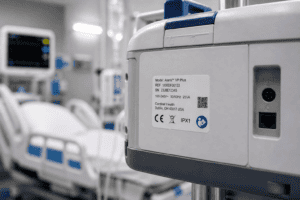
You can find healthcare equipment labels on many types of devices. These include diagnostic machines, surgical tools, monitoring systems, and portable equipment. Labels are used in hospitals, labs, and clinics every day.
Key Types of Medical Labels
- Product identification labels: Show model numbers, serial numbers, and manufacturer details
- UDI labels: Help track devices and meet regulatory requirements
- Compliance labels: Show the product meets FDA or global standards
- Healthcare equipment labels: Provide instructions, warnings, and safety details
- Tracking labels: Help follow products through use, service, and recall
Each label type plays a role in safety and compliance. Together, they help reduce risk and improve control over equipment.
Medical Labeling Regulations
Medical devices must follow strict rules. In the U.S., the FDA sets many of these standards. FDA-compliant labels must stay clear, correct, and attached during the product’s full life.
Key requirements include:
- UDI rules for device tracking
- Labels that stay readable over time
- Resistance to cleaning chemicals, heat, and daily use
- Clear symbols and consistent formats
Labels must also match approved product data. Even small errors can cause issues. If labels fail, companies may face recalls, fines, or delays in product approval.
Spec and RFQ Checklist
When sourcing medical OEM labels, clear details are important. A strong RFQ (Request for Quote) helps prevent problems and delays later. Short, clear specs also make it easier for suppliers to deliver the right solution the first time.
What to Include
- Materials: Choose based on use and environment
- Adhesives: Must stick well to metals, plastics, or coated surfaces
- Durability: Must handle cleaning, wear, and handling
- Printing: Must support barcodes, text, and UDI labels
- Data needs: Include serial numbers, QR codes, or tracking codes
Choosing the right materials and print method helps ensure long-term performance.
Required Documents

- Material data sheets
- Adhesive performance data
- Compliance certifications
- Approved artwork files and version control
Clear records help ensure your compliance labels meet both internal and regulatory needs. They also make audits easier and faster.
Validation and Testing
Testing ensures that medical labels work in real conditions. Labels must stay readable and in place during daily use.
Durable medical labels should handle cleaning, handling, and long-term wear without failure.
Common Tests
- Adhesion tests: Make sure labels stay attached
- Wear tests: Check resistance to scratches and damage
- Chemical tests: Test cleaners and disinfectants
- Environment tests: Check heat, cold, and moisture
Testing should match how the product is used in the field. For example, equipment in hospitals may face frequent cleaning. Labels must hold up to that use.
Good testing supports medical labeling regulations and helps reduce risk. It also improves product quality and reliability.
Audit Pitfalls to Avoid
Audits often focus on labeling. Weak processes can lead to problems, even if the label design looks correct.
Clear systems and regular checks help prevent issues.
Common Issues
- Labels that fade, peel, or become hard to read
- Missing or incorrect UDI labels
- Different label formats across products
- Missing test data or material records
These problems can slow approvals and create compliance risks.
Best Practices
- Use standard label designs across product lines
- Keep complete and organized records
-
Work with experts in FDA compliant labels
- Review and test labels on a regular schedule
Strong processes help ensure your labels stay compliant over time. They also make audits smoother and less stressful.
Why Medical Labels Matter
Medical labels play a key role in safety and compliance. They guide users, support tracking, and help ensure proper use of equipment.
Clear labels help reduce errors. Strong materials help labels last longer. Together, they improve both safety and efficiency.
PPS provides product identification labels, compliance labels, and durable medical labels for healthcare use. We work with medical OEMs to create labeling solutions that meet strict requirements and perform in real-world conditions.