

Faceplates and Overlays
Military Membrane Switches for Reliable Controls
When equipment supports a defense mission or an aircraft, operators need controls they can understand and use quickly. Military membrane switches provide a thin, durable control surface with clear graphics, responsive keys, and optional lighting. They can also help keep dust and moisture away from the internal circuit.
The right switch does more than send a command. It helps the operator use the equipment with speed and confidence. This guide explains the main features to consider when choosing membrane switches for military and aerospace equipment.
Why Use Military Membrane Switches?

Military and aerospace equipment may face vibration, dust, moisture, chemicals, frequent use, and extreme temperatures. A traditional control panel may have openings where dirt or liquid can enter. A sealed membrane switch has a flat surface that is easier to clean and protect.
Its thin design also fits equipment with limited space. Common uses include aircraft panels, communication devices, navigation equipment, ground vehicles, portable electronics, and test systems.
PPS offers custom membrane switches with tactile keys, environmental sealing, shielding, lighting, custom connectors, and graphic overlays.
Important Features of Aerospace Membrane Switches
Clear, Screen-Printed Graphics
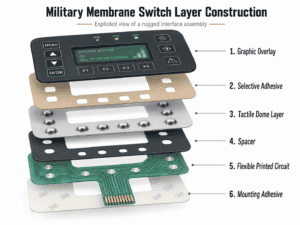
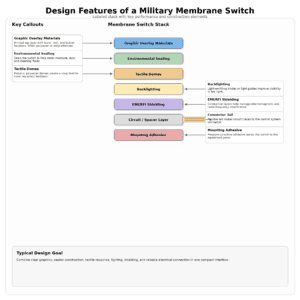
The top layer shows the buttons, symbols, warnings, and instructions. These graphics can be screen printed to create clear colors and easy-to-read markings.
A well-designed overlay helps operators find the correct control quickly. Color coding, raised keys, and clear symbols can also reduce confusion.
PPS produces faceplates and graphic overlays in several materials, finishes, colors, and shapes.
Tactile Feedback
A tactile keypad gives the user a physical response after each press. A small metal or polyester dome creates a snap that confirms the command.
This feedback can help when an operator wears gloves or cannot look directly at the keypad. Button size, spacing, and press force should match the way the equipment will be used.
Environmental Sealing
A sealed design can help keep dust, moisture, and cleaning fluids away from the circuit. The materials and adhesives must match the surface, expected exposure, and operating temperature.
A sealed switch does not automatically meet every military requirement. Engineers should review the needs of the full control system before selecting the construction.
Electrical Shielding
Nearby electronics may create electromagnetic interference or radio-frequency interference. Both forms of electrical noise can affect signals inside electronic equipment.
A shielded membrane switch can include a conductive layer that helps manage this noise. The full electrical design should define the level of shielding required.
Backlighting
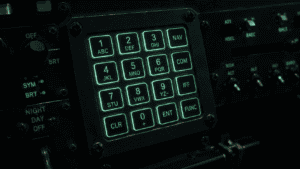
A backlit keypad makes buttons easier to see in dark aircraft cabins, military vehicles, and field equipment. Small light-emitting diodes can light specific keys, symbols, or status indicators.
The design team should review brightness, power use, viewing angle, and nighttime visibility when creating an aerospace control keypad.
How Do You Design a Rugged HMI?
A human-machine interface connects a person to a machine. A rugged human-machine interface (HMI) must remain clear and easy to use in a demanding setting.
To design a rugged HMI, define these needs before production:
- Available panel space
- Button size and spacing
- Glove use
- Temperature range
- Moisture and chemical exposure
- Lighting needs
- Connector type
- Mounting surface
- Required test methods
A custom defense interface switch may combine a keypad, printed circuit, graphic overlay, lighting, shielding, and rigid support. Early planning helps each part work as one complete interface.
Where Are Mission Critical Controls Used?
Mission critical controls may appear in aircraft communication panels, ground vehicles, navigation devices, portable military electronics, test equipment, and maintenance systems.
Each application has different needs. Review the operating environment, equipment drawing, electrical requirements, and testing plan before selecting aerospace membrane switches.
Learn more about PPS capabilities on the Military and Government industry page.
Frequently Asked Questions
- Can military membrane switches work with gloves?
Yes. Larger buttons, raised key areas, wider spacing, and tactile feedback can make the switch easier to use with gloves.
- Can a membrane switch include lighting and shielding?
Yes. A design can include lighting and conductive shielding layers. PPS lists integrated lighting and electrical shielding among its available membrane switch features.
- Does every military membrane switch meet military standards?
No. The required materials, tests, documents, and standards depend on the project. Review each requirement before production.
Build Reliable Controls with PPS
Military membrane switches can give defense and aerospace equipment a clear, compact, and durable control surface. PPS works with customers to develop membrane switches, overlays, faceplates, and other printed components for specific equipment needs.
Contact PPS to discuss durable printed components, labels, decals, overlays, membrane switches, or identification solutions for your military or aerospace application.