

Faceplates and Overlays
QR code labels: Embedding Support Data and Traceability in IoT Devices
As connected products become more sophisticated, QR code labels are becoming an essential part of IoT device labeling. They help manufacturers connect physical devices to digital resources such as setup instructions, support content, firmware updates, and traceability records. For companies in the technology and communication sector, that means better user support, easier maintenance, and improved visibility across the product lifecycle.
Unlike basic identification markings, QR labels can serve as a bridge between the product and the information needed to install, service, and manage it. When designed correctly, they support both end users and internal teams while improving the value of printed product identification.
Benefits of QR in IoT labeling
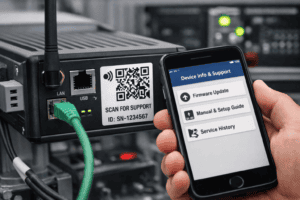
One of the main benefits of QR code labels is immediate access to support information. A technician or customer can scan the label and go directly to installation instructions, troubleshooting guides, FAQs, or warranty details. This reduces the time spent searching for documentation and helps improve the overall support experience.
QR labels also strengthen traceability. In many connected environments, devices are deployed across multiple sites, facilities, or field locations. A label linked to a serial number or digital asset record makes it easier to identify a specific device and review its service history. This is especially useful for asset tagging, maintenance tracking, and product lifecycle management.
Another major benefit is support for product updates. A firmware update QR can lead users to version-specific update instructions or an approved support portal. This helps reduce confusion and ensures teams are accessing the right information for the exact device in front of them.
In some applications, QR codes work alongside barcode labels, NFC labels, and other smart labels. Barcodes may support internal inventory control, while QR codes provide broader access to support content and connected device info. NFC can add convenience where tap-based interactions are preferred. Together, these tools help create more useful and flexible IoT device labeling systems.
Design and placement tips
To deliver real value, QR code labels must remain readable and easy to scan throughout the life of the product. That starts with proper design.
The code should be large enough for the intended scanning distance and printed with strong contrast for reliable readability. If the code is too small or placed in a difficult location, users may ignore it or struggle to scan it.
Material durability is equally important. In technology applications, labels may face heat, abrasion, chemicals, frequent handling, or outdoor exposure. Choosing the right construction helps ensure that the printed code stays legible from manufacturing through field use.
Placement should also be considered carefully. A QR label should be visible without interfering with normal operation or product aesthetics. Common locations include back panels, service access points, housings, or other stable flat surfaces. Avoid high-wear or heavily curved areas whenever possible.
It is also important to think about where the code leads. A product support QR should direct users to a relevant landing page, not just a generic homepage. Model-specific or serial-specific content usually creates a better user experience and makes the label more valuable.
Examples in maintenance and support
There are several practical ways manufacturers can use QR code labels in connected devices.
A communication device can use a QR code to link installers to setup steps, pairing instructions, and technical support content. A smart sensor can use the label for traceability tags tied to installation dates, maintenance logs, and replacement history. A field service team can scan a code to view approved documentation, service bulletins, or update procedures.
These examples show how a printed label can become a useful service tool rather than just a product marker. In modern electronics and connected equipment, that added functionality matters.
As IoT products continue to evolve, QR code labels offer a smart way to combine identification, support access, and lifecycle traceability in one compact solution. For technology and communication manufacturers, the right label can improve usability, service efficiency, and long-term product support.
PPS helps manufacturers develop durable custom labels, decals, overlays, and printed components designed for real-world performance. If your team is exploring QR code labels, NFC labels, or other smart labeling solutions for connected devices, PPS can help you create identification products that support both function and durability.