

.
Transportation Nameplates: Choosing Materials That Last
Transportation nameplates help identify vehicles, trailers, fleet assets, and equipment. They can show asset numbers, serial numbers, model details, barcodes, warnings, or manufacturer information.
These plates often face tough outdoor use. Sun, rain, road spray, dirt, vibration, cleaners, and daily handling can all cause wear. The right transportation nameplates help keep important information clear and easy to read.
PPS supports durable printed components for transportation and equipment applications.
Why Transportation Nameplates Need Durable Materials
Transportation equipment works outdoors. It also moves through changing conditions. A nameplate may face heat, cold, moisture, impact, and abrasion during normal use.
Basic plates may not last in these settings. Strong materials help protect text, numbers, barcodes, and safety details. This matters for equipment nameplates used for service, tracking, safety, and product identification.
Common uses include vehicle identification plates, trailer data plates, asset tags, serial plates, barcode plates, transport equipment tags, warning plates, and product identification plates.
For related options, PPS also offers labels, decals, stickers, and tags for demanding applications.
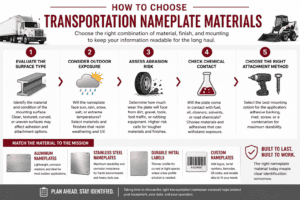
Material Options for Transportation Nameplates
The best material depends on where the plate will go. It also depends on what the plate will face in the field.
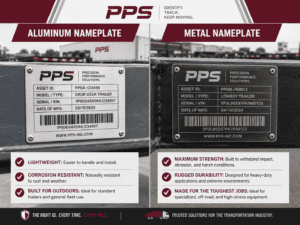
Metal nameplates are a strong choice for long-term identification. They work well on trailers, fleet equipment, machinery, and parts that need a rigid plate.
Aluminum nameplates are common in transportation. Aluminum is lightweight and durable. It can be used for outdoor nameplates, vehicle identification plates, equipment tags, and serial plates.
Durable metal labels may work when a thinner option is needed. They can fit smaller parts, curved surfaces, or tight spaces.
Custom nameplates give buyers more control. You can choose the size, shape, finish, data, and mounting style. They can include barcodes, QR codes, logos, warning text, serial numbers, or variable data.
PPS provides custom nameplates for equipment, vehicles, products, and identification needs.
Choosing the Right Finish, Adhesive, and Attachment
The material is only one part of the nameplate. The finish and mounting method also affect performance.
Outdoor nameplates should be built for weather. Sunlight, rain, and temperature changes can make text harder to read over time.
Abrasion is another concern. Nameplates near steps, hitches, cargo areas, service points, or frame rails may be scraped by tools, boots, road debris, or cleaning work.
Chemical contact should also be reviewed. Fuel, oils, solvents, cleaners, and maintenance chemicals may affect the plate, print, adhesive, or coating.
Attachment should match the equipment. Some transportation nameplates use adhesive. Others need rivets, screws, or mounting holes.
For printed control panels or interface parts, PPS faceplates and overlays may also be useful.
What Information Should Nameplates Include?
Transportation nameplates should show the information workers need in the field. This may include an asset ID, serial number, model number, VIN-related data, weight rating, inspection data, warning text, barcode, or QR code.
The layout should be easy to read. Use clear spacing, strong contrast, and large enough barcodes for scanning. If the plate will be scanned outdoors, the barcode area should be protected from scratches and fading.
You can also review PPS product options to compare nameplates, labels, decals, tags, overlays, and other printed components.
FAQ: Transportation Nameplates
What are transportation nameplates?
Transportation nameplates are durable plates used on vehicles, trailers, fleet equipment, and transportation parts. They can show asset IDs, serial numbers, warnings, barcodes, or product data.
Are aluminum nameplates good for outdoor equipment?
Yes. Aluminum nameplates can be a good option for outdoor equipment. The finish, marking method, and attachment should match the application.
What is the difference between labels and nameplates?
Labels are often flexible and adhesive-backed. Nameplates are usually more rigid. They may use metal, aluminum, or other durable materials.
Conclusion
Transportation nameplates work best when they match the surface, environment, and identification need. The right material, finish, adhesive, and mounting method can help keep equipment data readable longer.
PPS helps customers develop durable printed components, labels, decals, overlays, equipment nameplates, and identification solutions for transportation applications.
Contact PPS to discuss durable printed components, labels, decals, overlays, or identification solutions for your transportation application.